
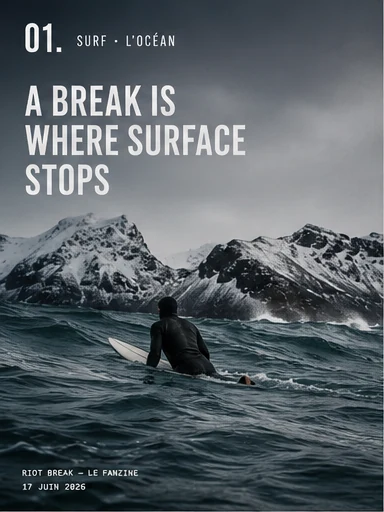
A break is where surface stops
There is a place where the surface stops. That is where cold water begins.
Last winter, surfer Dylan Graves and Norwegian Tim Latte rode up the Arctic fjords of northern Norway, then drove fifteen hours to the Lofoten Islands. Air dropping from minus five to minus twenty in minutes, hands and feet that stop answering, days of three hours of light. No palm trees, no sunset. The cold as a condition, not a backdrop.
That is the surfing that interests us. Not the performance, not the postcard destination. Cold water sorts. It clears out those who came for the photo and keeps those who came for the wave.
A geography of cold within driving distance
We say Arctic, but cold water starts much closer. Thurso, Scotland: a tubing right-hander over reef, water blackened by peat, eight to twelve degrees, the closest world-class wave to European cities. Brittany in winter, La Torche, Crozon, the Crozon peninsula, few people. The Basque Country in a four-three, Parlementia, the Côte des Basques.
Cold is not a Nordic fantasy. It's at Quiberon in January. All it takes is a thicker wetsuit and a reason to go.
What the cold does to the eye
Photographer Chris Burkard set the grammar: hard light, vastness, solitude. Granite, snow, dark sea. That is exactly the material we look for at RIOT BREAK: flawless objects in a raw world, without ever sliding into the bleak. Keep the air, the pale grey, the off-white.
Cold isn't told in superlatives. It's told dry. A wave, a walk down to the water, the way back. That's all, and it's enough.